


The Surprising Connection Between Neck Pain and Headaches
Discover Drug-Free Pain Relief with Physiotherapy
Have you ever dealt with neck pain that seems to creep up from your shoulders and into your head? It’s not your imagination! Neck pain and headaches often go hand in hand.
We do have some good news, though: the team at Stride Sports & Physiotherapy can help you tackle both issues using an all-natural approach that doesn’t require pain medication. It all works by addressing the underlying dysfunction in your cervical spine that’s contributing to both your neck pain and your headaches.


Exploring The Link Between Neck Pain and Headaches
Headaches are one of the most common medical complaints in the world, in large part because there are over a hundred different types of headache, each with its own causes and symptoms.
The type of headaches that begin in your neck and radiate upward are known as cervicogenic headaches. The upper cervical spine shares nerve pathways with areas of the head and face. When the joints, muscles, or nerves in the neck become irritated, they can send pain signals to the head, resulting in cervicogenic headache pain.
For this reason, cervicogenic headaches usually have a clear mechanical cause, unlike other common types of headaches, such as migraines. Some of the contributing factors we often see include:
- Repetitive strain from work or daily habits
- Stiff or restricted neck joints
- Poor posture, especially prolonged sitting or screen use
- Muscle tightness in the neck, shoulders, or upper back
- Previous neck injuries, such as whiplash
How Can I Tell if My Headache is Neck-Related?
Cervicogenic headaches often present differently from other headache types. Look for these signs:
- Pain that starts in the neck and spreads to the head or behind one eye
- Headaches triggered by neck movement or sustained postures
- Limited neck range of motion
- Neck stiffness or soreness before or during the headache
- Pain on one side of the head or neck
Because these sources are physical, addressing movement, strength, and joint health is key to lasting relief. Medication often only dulls symptoms, but physiotherapy can address the underlying factors directly.

How Physiotherapy Helps with Neck Pain and Headaches
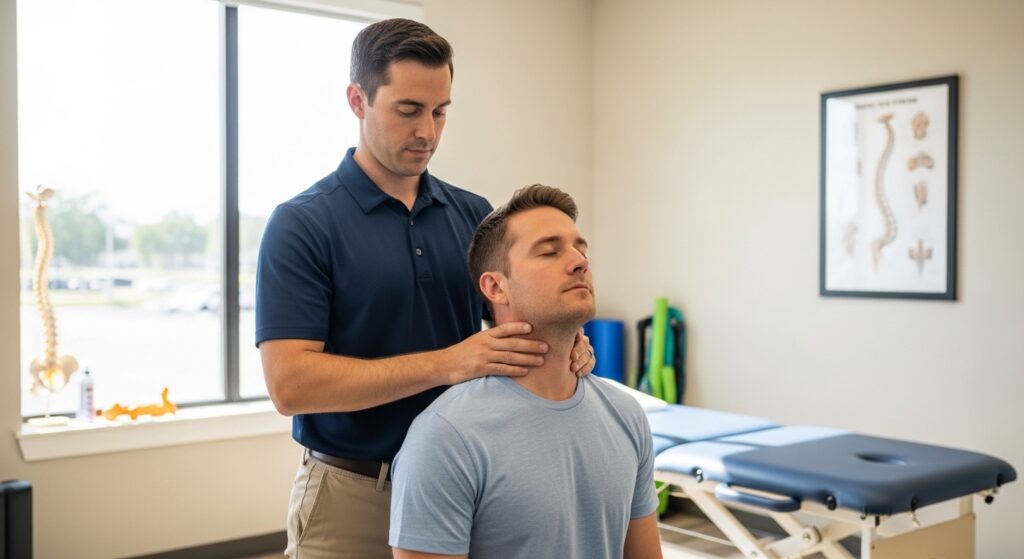
When you visit Stride Sports & Physiotherapy, we’ll start with a thorough assessment of your posture, movement patterns, joint mobility, and muscle function. This allows your physiotherapist to create a truly customized care plan that they’ll guide you through from start to finish.
We pull from several all-natural techniques to develop these plans, including the following:
Personalized Guidance: Advice on symptom triggers, managing flare-ups, and preventing pain recurrence, allowing you to take a proactive role in your care.
Manual Therapy: Hands-on techniques to help improve joint movement and reduce muscle tension, decreasing irritation around sensitive nerves and improving neck mechanics.
Dry Needling: A specialized approach that uses thin needles to release tight bands of muscle tissue that refer pain to the head or neck.
Strength and Mobility Exercises: Targeted exercises designed to enhance the deep neck muscles that support posture and head control, reducing strain on joints and soft tissue.
Posture and Ergonomic Training: Helping you identify and correct small habits that can overload the neck.
Neuromuscular Re-education: Techniques to retrain how muscles coordinate during movement, helping to reduce stress on the neck during daily tasks.
What Makes This Approach Effective?
Our team understands that your neck is one part of an entire system. Improving how the spine, shoulders, and muscles work together can help reduce both neck pain and headaches, all without the use of pain medications.
Our patients often report fewer headaches, improved neck mobility, and an easier time completing day-to-day tasks. Your care is always tailored to your needs, activity level, and goals.
Find A Better Path Forward with Stride Sports & Physiotherapy
You don’t have to live with neck pain and recurring headaches. Addressing the physical source of the problem can change how you feel and function day to day.
If you’ve been dealing with persistent neck pain or headaches that seem to radiate up from your shoulders, physiotherapy could be exactly what you need. Schedule an appointment with our team, and together we’ll find the cause of your pain, help you restore movement, and get you back to the activities you love.
Exercise of the Month
Lower Trunk Rotations
(Lower Back, Core)
Start by lying face up on the floor with your knees bent. Allow your knees to slowly drop to one side. Your lower back should rotate, but your shoulders should stay flat on the ground. Hold for 30 seconds. Bring your knees back up and then drop them to the opposite side. 2 Sets, 2 Reps.

This Month’s Recipe: One-Pot Miso-Turmeric Salmon and Coconut Rice
Feed your recovery with a meal designed to target the root causes of tension. This “one-pot” powerhouse combines Turmeric and Miso—nature’s anti-inflammatory duo—to help soothe nerve irritation and reduce the chemical triggers of headaches.
Ingredients:
- 2 cups white jasmine rice
- 1 (15-ounce) can full-fat coconut milk
- Salt and pepper
- 4 scallions, light white and green parts thinly sliced
- 2 tablespoons white miso paste
- 2 tablespoons soy sauce
- 1 tablespoon olive oil
- 1 teaspoon ground turmeric
- 1 ½ pounds skinless salmon fillets, cut into 2- to 3-inch pieces
- 5 packed cups/ 5 ounces baby spinach
- 1 lime, quartered
- Cilantro leaves (optional), for garnish
Instructions:
Step 1:
In a large Dutch oven or other large heavy pot with a tight-fitting lid, combine the rice, coconut milk and 2 cups of water; season with 1 teaspoon salt. Bring to a boil, covered, over high.
Step 2:
Meanwhile, in a medium bowl, combine the scallions with the miso, soy sauce, olive oil, turmeric and a few grinds of pepper to form a chunky paste. Add the salmon; toss to coat.
Step 3
When the rice starts to boil, reduce the heat to medium-low, adjusting it as needed to maintain a simmer. Stir to make sure nothing is sticking on the bottom.
Step 4:
Layer the spinach on top of the rice. Squeeze 2 lime quarters over the spinach. Nestle the salmon pieces on top in an even layer, scraping in any scallions remaining in the bowl. Cover and cook until the salmon is just cooked through, breaking apart the thickest piece to check, 12 to 16 minutes.
Step 5:
Squeeze the remaining lime quarters over the salmon. Top with cilantro, if using. Scoop into bowls or plates to serve.
Test Your Knowledge!
Take this quick quiz to see how much you know about physiotherapy and neck health.