


Headaches and Tooth Grinding? It May Be Coming From Your Jaw
Have you been dealing with headaches that won’t go away? Tightness throughout your face? Grinding your teeth during the night to the point that you wake up with an aching jaw?
At first glance, you might think these symptoms are unrelated, and indeed, they often get treated separately. But in many cases, they stem from an unexpected source: dysfunction of your temporomandibular joint (TMJ).
The TMJ, which connects your jaw to your skull, plays a bigger role in your daily comfort than most people realize. And when it’s not working well, the effects can extend far beyond the jaw.

What Is TMJ Dysfunction?
TMJ dysfunction refers to problems with the jaw joint and the muscles that control it. The joint shares nerve pathways with the head and neck, meaning irritation there can increase muscle tension in the face and neck, leading to symptoms beyond simple jaw pain, including headaches and teeth grinding.
TMJ-Related Headaches
TMJ dysfunction can contribute to tension-type headaches, which are often felt around the temples, forehead, or behind the eyes. They occur when overworked jaw muscles become fatigued and begin to refer pain into nearby areas.
As the jaw becomes irritated, surrounding neck muscles often tighten to compensate, increasing overall tension. Shared nerve pathways between the jaw and head also amplify pain signals, making headaches more persistent.
Teeth Grinding
Teeth grinding, also known as bruxism, commonly occurs during sleep or periods of stress and concentration. It’s often linked to muscle imbalance and poor jaw positioning.
When the TMJ is not functioning well, the body may respond with increased clenching or grinding, which places additional strain on the joint. Over time, this creates a cycle of muscle tension and irritation that reinforces the habit.

How Physiotherapy Addresses TMJ-Related Symptoms
Fortunately, the team at Stride Sports & Physiotherapy can help improve the function of your jaw joint, just as they can address concerns elsewhere in your body.
For TMJ issues, we focus on restoring normal movement, reducing muscle tension, and improving the coordination of the jaw, neck, and surrounding structures.
Treatment Techniques We Might Suggest
Manual Therapy
Manual therapy involves hands-on techniques applied to the jaw, neck, and surrounding muscles to reduce tension and improve movement. Treatment may include soft-tissue release, joint mobilizations, and trigger-point therapy to address tight or sensitive areas, decrease pain, reduce protective guarding, and restore more comfortable jaw function.
Exercise Therapy
Exercise therapy focuses on retraining how the jaw and neck move together through controlled, targeted movements. These exercises improve coordination, reduce strain during daily activities, and support long-term symptom management. Over time, this helps the jaw function more efficiently with less discomfort.
Postural Correction
Postural correction addresses how head and neck alignment affects the jaw. For example, forward head posture can increase stress on the TMJ and surrounding muscles, contributing to pain and dysfunction. Strengthening the supporting muscles and increasing postural awareness support better alignment throughout the day.
Habit Modification
Our team can help you identify triggers and develop awareness to change habits that place unnecessary stress on the jaw, such as prolonged jaw clenching or excessive chewing. Small adjustments can significantly reduce irritation and support recovery.
Relaxation and Breathing Strategies
Relaxation and breathing techniques help reduce muscle tension and calm the nervous system. Stress can increase jaw clenching and contribute to headaches, so improving breathing patterns can play an important role in symptom management.
Dry Needling
Dry needling targets tight, overactive muscles using thin needles to help release tension, helping to reduce pain, improve muscle function, and decrease headache frequency. We typically combine this technique with other treatments for more effective results.
What Does Improvement Look Like?
With consistent care, many people can reduce their symptoms and improve day-to-day jaw function. This might include:
- Fewer headaches
- Reduced jaw tension
- Less grinding or clenching
- Easier eating and speaking
- Better sleep quality
Ready to Break the Cycle of Jaw Dysfunction?
If you’re dealing with headaches, jaw tension, or teeth grinding, it’s worth looking beyond the surface. These symptoms are often connected and can be treated with a personalized physiotherapy program.
An assessment at Stride Sports & Physiotherapy can identify the contributing factors and create a plan tailored to your needs. Contact us today to get started.
Sources: https://www.ncbi.nlm.nih.gov/books/NBK551612
More Surprising Facts About TMJ Pain
Headaches and tooth grinding aren’t the only unexpected aspects of TMJ pain. In fact, Stride Sports & Physiotherapy patients are often surprised to learn how many seemingly unrelated body parts or factors can be involved.
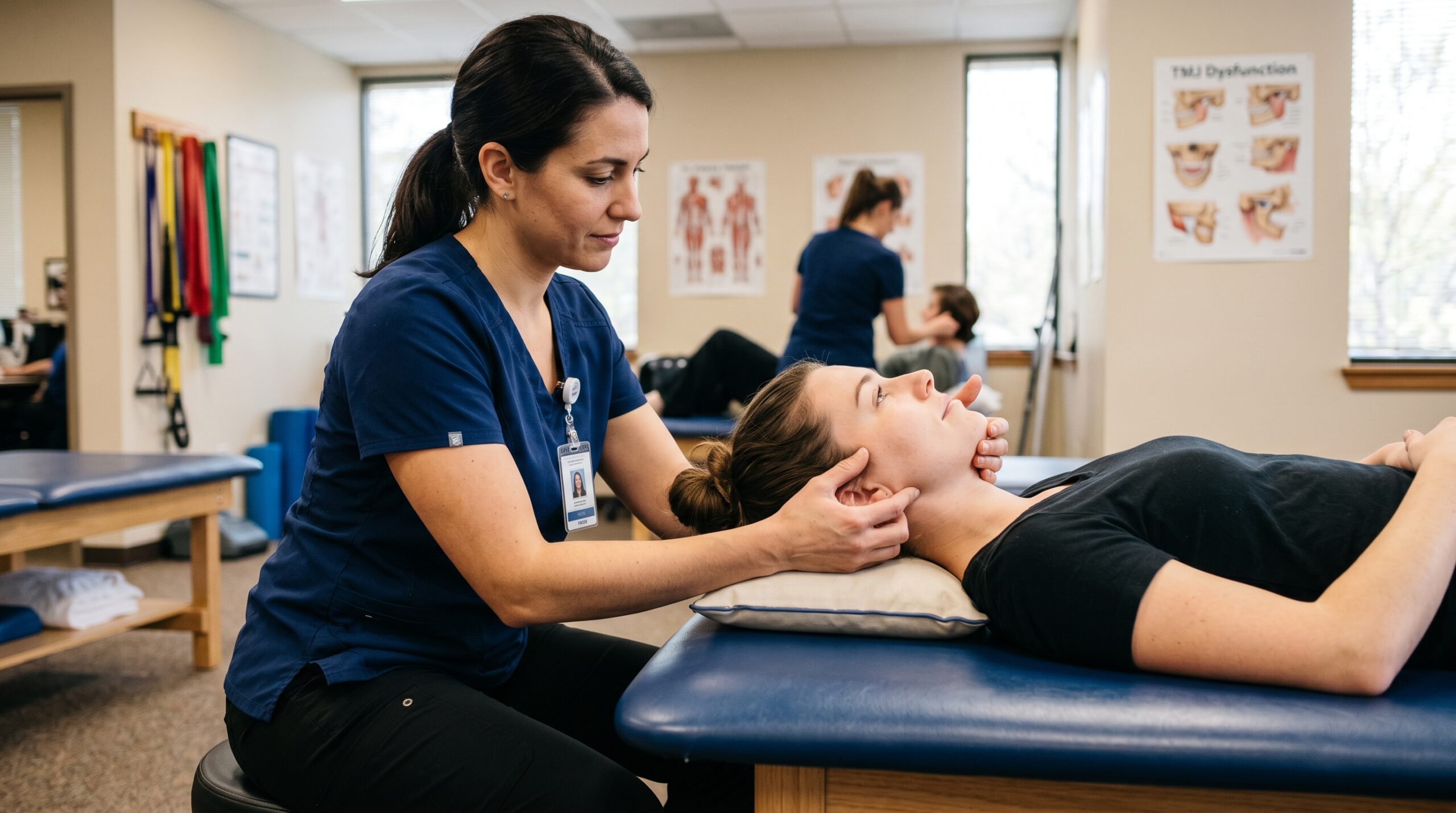
Three Lesser-Known TMJ Facts to Help You Better Understand Your Symptoms
Your Jaw and Your Posture are Teammates
Your jaw doesn’t work alone. It’s closely connected to your neck, upper back, and even the way you breathe. When your posture isn’t ideal, the jaw often compensates. This is why your treatment might target the neck and upper spine, not just the jaw itself.
Ear Symptoms Are More Common Than You Think
Sometimes, TMJ dysfunction can cause sensations of ringing, fullness, or pressure in the ears, like the feeling you get when you’re on an airplane.
Because the jaw and ear share muscles and nerves, irritation in one often affects the other. Our patients are often relieved to learn these symptoms aren’t just in their head and, moreover, that they’re treatable with physiotherapy.
It’s Not Always About the Jaw Joint Itself
While we’re specifically looking at TMJ dysfunction here, it’s important to know that sometimes, the issue might not be with your jaw joint at all. In some cases, the surrounding muscles may be overworked or imbalanced. This is why a whole‑body approach often leads to the best results.
Ready to Learn More About the TMJ?
Don’t let TMJ issues hold you back! If you suspect a problem with your jaw joint, schedule an appointment with Stride Sports & Physiotherapy to learn more about how we can help.
Find A Better Path Forward with Stride Sports & Physiotherapy
You don’t have to live with constant headaches, facial tightness, and a sore jaw. Addressing the physical source of your TMJ dysfunction can completely change how you feel and function day to day.
If you’ve been dealing with persistent teeth grinding, morning jaw pain, or tension headaches that just won’t go away, physiotherapy could be exactly what you need. Schedule an appointment with our team, and together we’ll find the root cause of your symptoms, help you restore comfortable jaw movement, and get you back to enjoying your life without the constant strain.
Exercise of the Month
Prone Shoulder Extension
(Shoulders, Upper Back)
Start by lying facedown on a table. Place a rolled towel under your forehead. Hold the dumbbell in one hand. Position yourself so that the arm holding the dumbbell is hanging off the table. Move your shoulder that is hanging off the table upwards slightly so that your shoulders are in line with each other. Keeping your arm straight during the movement, raise the dumbbell straight back so that at the top of the movement, your arm is parallel with your body. Lower the dumbbell back to the starting position with control. 3 Sets, 10 Reps. (Materials needed: towel, dumbbell)
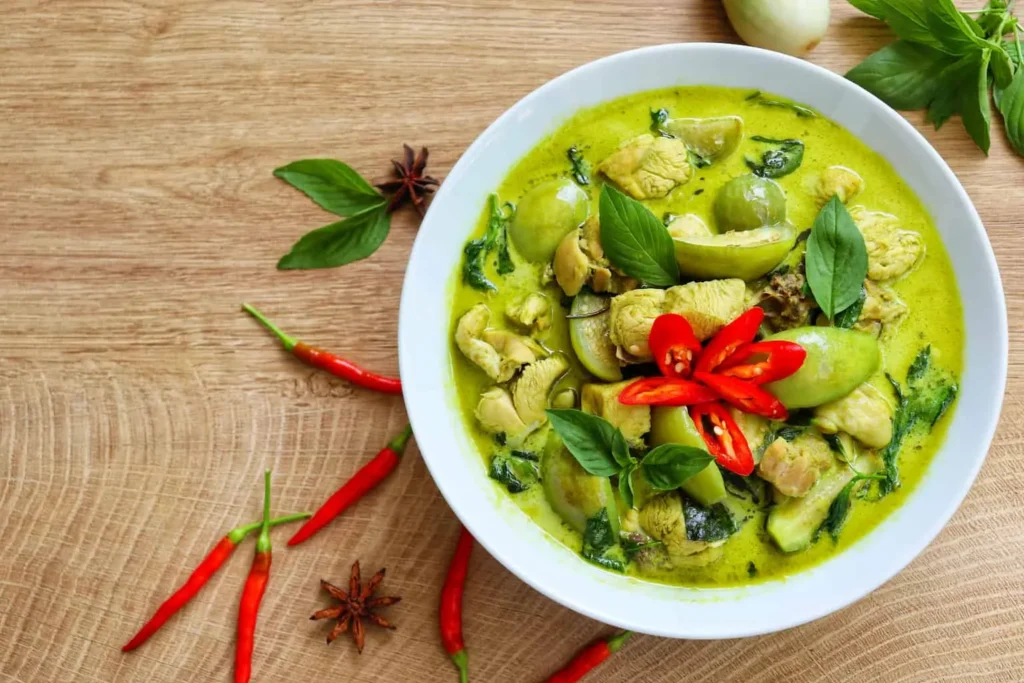
This Month’s Recipe: Thai Green Curry
Thai Green Curry in 30 minutes made by freshening up store bought curry paste OR with a homemade green curry paste! Whichever way you go, the one essential step to make a really great green curry is to fry off the curry paste.
Ingredients:
Curry
- 4 – 6 tbsp Thai Green Curry Paste (Maesri best)
Extras – for jar curry paste:
- 2 large garlic cloves, minced
- 2 tsp fresh ginger, finely grated
- 1 tbsp lemongrass paste
Green Curry:
- 2 tbsp vegetable oil
- 1 cup (8 fl oz) chicken or vegetable broth, low sodium
- 14 oz coconut milk, full fat
- 1 – 3 tsp fish sauce
- 1 – 3 tsp white sugar
- 1/8 tsp salt
- 6 kaffir lime leaves, torn in half
- 12 oz chicken thigh, skinless boneless, sliced
- 2 Japanese eggplants, small, 2/5-inch slices
- 1 1/2 cups snow peas, small, trimmed
- 16 Thai basil leaves
- Juice of 1/2 lime, to taste
Garnishes:
- Crispy fried Asian shallots, highly recommended
- Thai basil or cilantro/coriander, recommended
- Green or red chili slices, optional
- Steamed jasmine rice
Instructions:
Heat oil in a heavy based skillet or pot over medium high heat.
Add curry paste (and garlic, ginger and lemongrass Extras, if using) and cook for 2 to 3 minutes until it mostly “dries out”. Don’t breathe in the fumes!!
Add chicken broth and coconut milk, mix to dissolve paste.
Curry in a jar seasonings: Add 1 tsp fish sauce, 1 tsp sugar, no salt.
Add kaffir lime leaves. Mix then bring to simmer.
Add chicken, stir then lower heat to medium so it’s bubbling gently. Cook 7 minutes.
Add eggplants, cook 5 minutes until soft.
Taste sauce. Add fish sauce or salt for more saltiness, sugar for sweetness.
Add snow peas, cook 2 minutes until a bit softened, then stir through basil and lime juice. Sauce should have reduced but will still be a bit on the thin side, not thick – that’s how it should be. DO NOT keep simmering – sauce will darken.
Serve curry over jasmine rice with garnishes of choice.
Test Your Knowledge!
Take this quick quiz to see how much you know about physiotherapy and neck health.