

How To Relieve Dizziness and Vertigo
Lisa was tired of dealing with dizziness. Specifically, she was tired of dealing with vertigo, a spinning sensation that would suddenly hit her at seemingly random times throughout the day. The attacks made her wary of driving, and she worried she might fall and injure herself at home.
But then Lisa learned something interesting: physiotherapy can help with vertigo and dizziness. She had some experience with PT, having gone through rehabilitation after a shoulder injury, but it never occurred to her that PT might be the solution to her issues with vertigo.
Eager for relief, Lisa made an appointment at Stride Sports & Physiotherapy. We conducted a comprehensive assessment and found that she had BPPV (benign paroxysmal positional vertigo). It develops due to the buildup of tiny crystals in the inner ear, which interfere with the body’s vestibular system.
We helped Lisa understand that her vertigo attacks weren’t as random as she thought. Instead, they occurred due to specific head movements that jostled the crystals. We helped identify those movements and performed some hands-on maneuvers that dislodged the crystals so they could no longer cause symptoms.
Because vertigo (and sometimes even dizziness) has a vaguely hallucinatory quality, people are often surprised to discover that its origins are typically physical. Fortunately, because they’re physical, PT is an excellent choice for finding relief.
To learn more, call to schedule an appointment.

Why Do We Feel Dizziness and Vertigo, Anyway?
First, it’s important to understand that dizziness and vertigo are technically two different things.
Dizziness is an umbrella term that can refer to any feelings of lightheadedness or wooziness. Most of us have experienced dizziness: maybe you stood up too quickly or felt a headrush when you got off a roller coaster. It can have other causes, too, such as medication side effects or low blood sugar.
Vertigo is a type of dizziness. It refers to a particular sensation: that you or the room is spinning around even when you’re standing still. It typically stems from issues with your vestibular system, which controls your body’s sense of balance.
The vestibular system is primarily located in your inner ear, although parts are also in your cerebellum. Most people who experience vertigo have inner ear issues, whether BPPV (the most common cause of vertigo) or another underlying condition, such as Meniere’s disease.
In some cases, vertigo might stem from issues in your cerebellum, although those are rare.
The Key Factor: A Personalized Approach
Physiotherapy offers different options to help people manage their dizziness and vertigo. We always begin treatment with a comprehensive assessment to help us understand the root cause of your symptoms.
As with Lisa, we’ll also try pinpointing any triggers for dizziness or vertigo. By identifying these triggers, you can work to avoid them. For example, we can show you how to modify activities to reduce the likelihood of vertigo attacks. We’ll also perform specific movements and positions to restore inner ear function, just as we did with Lisa.
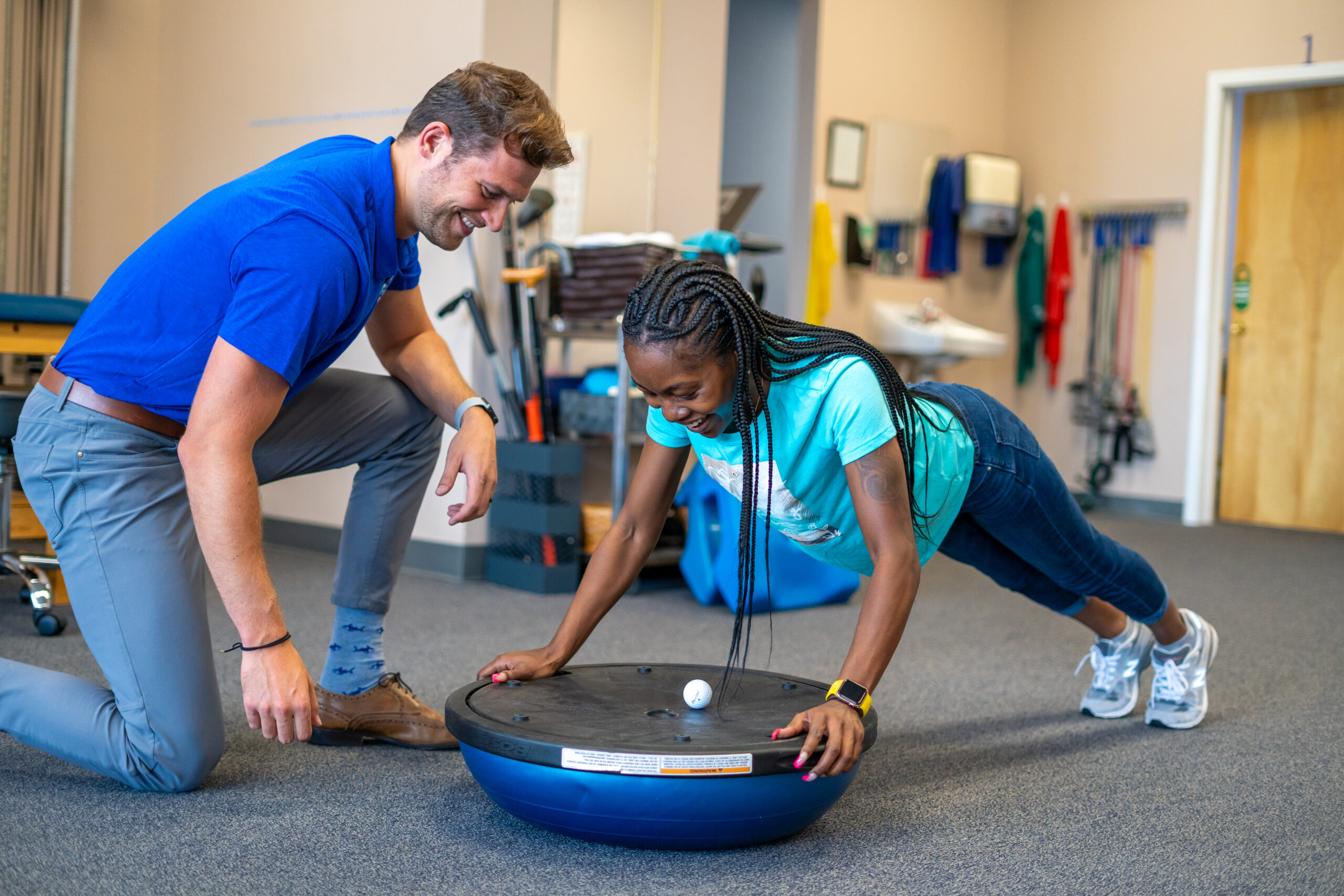
Another way we help people with dizziness and vertigo is through dedicated balance training. Vertigo can be unnerving, but it’s not usually dangerous in and of itself. Instead, the danger comes from an increased fall risk. Balance training helps improve your overall balance and stability through progressive balance challenges and strengthening exercises, especially in the core.
A Specialized Approach: Vestibular Rehabilitation
If your vertigo stems from an impairment in your vestibular system, we may suggest you begin a vestibular rehabilitation program. Vestibular rehab is a specialized type of physiotherapy that focuses specifically on inner ear dysfunction. While your exact program will be personalized, it generally includes the following:
- Relaxation techniques to help you navigate a vertigo attack
- Habituation exercises that help you become accustomed to the vertigo sensations so that they lessen over time
- Vision exercises to improve your gaze stability, which often plays a role in vertigo symptoms
We’ll combine these specialized techniques with balance and conditioning exercises to ensure well-rounded treatment!
Can The World Stop Spinning?
Literally, no–but when you successfully manage dizziness and vertigo, it can certainly feel like it! Call Stride Sports & Physiotherapy today to find out if you might benefit from physiotherapy.
Sources: https://www.physio-pedia.com/Vestibular_Treatment, https://www.ncbi.nlm.nih.gov/books/NBK482356/ , https://www.ncbi.nlm.nih.gov/pmc/articles/PMC5954334/
A Proactive Approach to Concussion Prevention
Many of us know that concussions can happen unexpectedly. However, not enough people know that physiotherapy offers valuable strategies to reduce your risk and enhance your body’s resilience.
Strengthening the Neck
A strong neck provides crucial stability for your head, helping reduce the impact of sudden jolts or collisions. Our PTs can tailor exercises to improve your neck strength, mobility, and range of motion.
Addressing Previous Injuries
Lingering weakness or instability from previous injuries can increase your susceptibility to concussions. We can help rehabilitate these areas and restore optimal function to reduce your overall risk of a concussion or related injuries.
Proper Technique in Sports and Activities
Improper form during sports or recreational activities can increase your risk of head injury. We can analyze your movements and provide guidance on proper technique to ensure that you’re performing activities safely and efficiently.
Enhancing Balance and Coordination
Falls are a leading cause of concussions, especially among older adults. Our physiotherapists can assess your balance, proprioception, and coordination and design personalized exercise programs to improve these skills.
While physiotherapy can’t completely eliminate the risk of concussions, it does equip you with tools to minimize your chances of experiencing this type of injury. Physiotherapy empowers you to take an active role in protecting your brain health by strengthening key support areas, improving balance, addressing previous injuries, and promoting safe practices.
Find A Better Path Forward with Stride Sports & Physiotherapy
You don’t have to live with constant dizziness and recurring vertigo. Addressing the physical source of the problem can completely change how you feel and function day to day.
If you’ve been dealing with persistent balance issues, lightheadedness, or a sudden spinning sensation that catches you off guard, physiotherapy could be exactly what you need. Schedule an appointment with our team, and together we’ll find the root cause of your symptoms, help you restore your balance, and get you back to the activities you love with confidence.
Exercise of the Month
Neck Glide
(Neck)
Stand tall with your shoulders relaxed and your head in a neutral position. Gently draw your head straight backward, keeping your chin level, like you’re trying to make a double chin. Avoid tilting your head up or down. Hold briefly, then return to the starting position. 3 Sets, 10 Reps. (Materials needed: none)

This Month’s Recipe: Chicken, Red Dates and Ginger Soup
Chicken, Red Dates, and Ginger Soup is a deeply warming and restorative dish that makes a hearty meal for the whole family. The sweet dates and zesty ginger create a beautifully rich, comforting broth perfect for chilly evenings.
Ingredients:
- 2-2 1/2 pounds whole chicken or parts
- 1/2 white or yellow onion, peeled
- 2 inches fresh ginger, unpeeled and halved
- 3 medium carrots, peeled and thinly sliced
- 5 Chinese red dates
- 3 tablespoons dried goji berries
- sea salt
Instructions:
Place the chicken in a medium pot, and add enough cold water to just cover the chicken. Bring to a boil over medium-high heat, uncovered.
Once boiling, add the onion and ginger to the pot. Reduce the heat to medium, cover, and cook for 40 minutes. Remove the lid occasionally to skim any foam off the top and discard.
Remove from the heat. Move the chicken to a plate to cool. When cool enough to handle, shred the chicken. Return the chicken carcass and 1-2 cups of the shredded chicken back to the pot. (Save the remaining shredded chicken for another use.)
Add the carrots and dates to the pot, and simmer over low heat, uncovered, for 45 minutes. Add the gogi berries and cook an additional 15 minutes. Season with salt to taste.
Test Your Knowledge!
Take this quick quiz to see how much you know about physiotherapy and neck health.