Stride WP Header - Desktop

True Pain Relief From Hip and Knee Pain

True Pain Relief From Hip and Knee Pain

Addressing hip and knee pain effectively in physiotherapy involves much more than just focusing on the areas where pain is felt. It requires an in-depth understanding of the body’s interconnected systems, where issues in one region can impact another, leading to pain and discomfort. Our comprehensive approach at Stride Sports & Physiotherapy is key to lasting pain relief and restoring function.

The Interconnected Nature of Musculoskeletal Pain

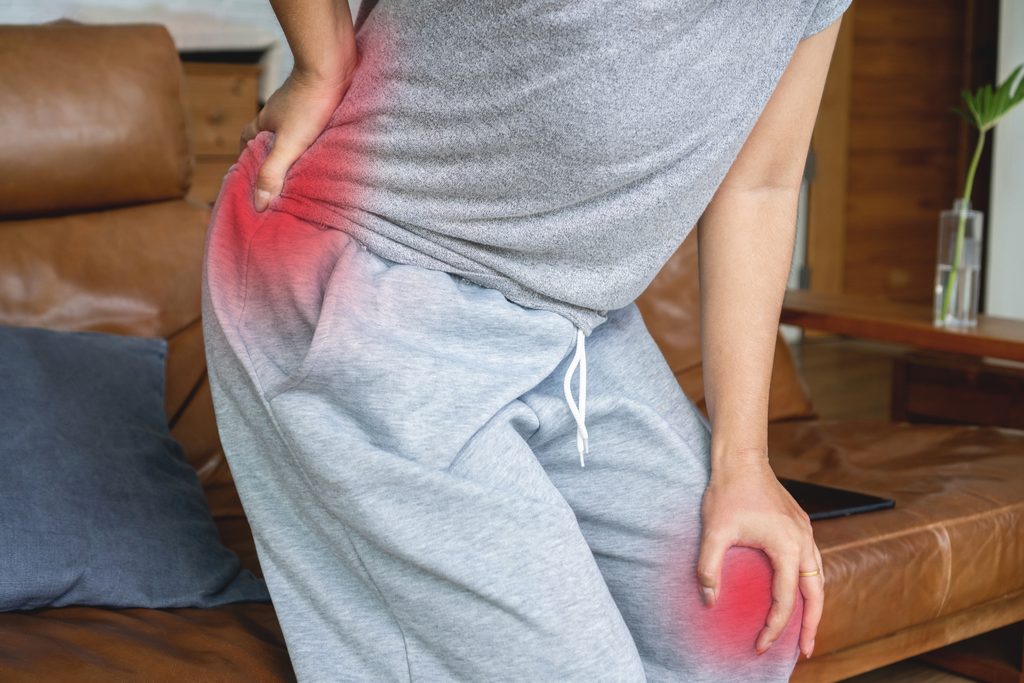
Our physiotherapists are well-versed in regional interdependence, which is especially relevant when dealing with hip and knee pain. This concept is based on the body’s joints being part of a “kinetic chain,” where dysfunction in one joint can influence the other. For instance, hip stiffness can lead to altered knee mechanics and resultant pain, and vice versa.

Initial Assessment: A Crucial Step

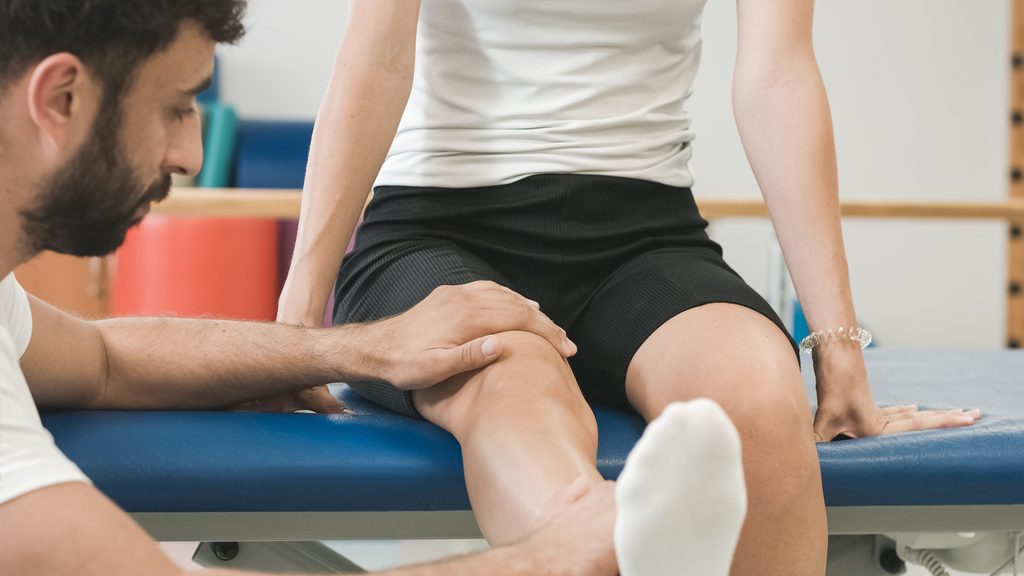
Our process starts with a detailed assessment, where one of our skilled therapists examines the hip and knee and how they impact the rest of the entire body. This includes reviewing the patient’s medical history and a physical examination to identify any signs of dysfunction. Understanding the whole picture helps uncover underlying issues, such as how lower back problems can result in hip pain or how hip issues can lead to knee discomfort.

Pinpointing the Source of Pain

Distinguishing between hip and knee pain requires a blend of skills and techniques. Our physiotherapists use range of motion tests, strength assessments, and special tests to identify the exact source of discomfort. The nature of the pain, its onset, and activities that worsen or improve it provide crucial clues. For example, groin or buttock pain typically indicates hip issues, whereas localized pain around the knee points to knee problems.

However, pain can sometimes be misleading. Knee pain may originate from the hip and vice versa, which is why an assessment by one of our physiotherapists is vital to ensuring that the treatment targets the problem area.

Customized Treatment Plans

Based on the diagnosis, your therapist will create a personalized treatment plan. Your plan will typically combine manual therapy, exercise therapy, and patient education.

  • Manual Therapy: Joint mobilization and soft tissue mobilization techniques are used to improve joint movement, alleviate muscle tension, and reduce pain.
  • Exercise Therapy: This includes strengthening exercises for muscles around the hip and knee. In addition, we’ll teach you mobility exercises to increase your range of motion and restore your functional abilities. 
  • Patient Education: Educating patients about their condition is crucial. This includes advice on posture, weight management, and lifestyle modifications to manage pain and prevent future problems.

Active Patient Involvement

Successful treatment relies heavily on patient participation. Physiotherapists encourage patients to actively engage in recovery, including following exercise routines and making necessary lifestyle adjustments.

Unlocking the Secrets to Hip and Knee Pain Relief

Effective physiotherapy for hip and knee pain goes beyond treating symptoms; it focuses on uncovering and addressing the root cause of pain through a comprehensive and individualized approach. 

By combining thorough assessment, targeted treatment, and patient education, our physiotherapists play a crucial role in providing real pain relief and improving patients’ quality of life. 

Don’t let hip and knee pain hold you back any longer. Embrace the path to a pain-free life with expert physiotherapy. Schedule your consultation at Stride Sports & Physiotherapy today and take the first step towards regaining your mobility and joy in movement!

Sources: https://www.ncbi.nlm.nih.gov/pmc/articles/PMC8225295/, https://www.jospt.org/doi/10.2519/jospt.2018.7877

Exercise of the Month

Bridging

(Glutes, Lower Back, Hamstrings)

Begin on your back. Bend your knees and keep your back flat on the ground. Gently, contract your abdominals and hold to keep your back flat as you move up into the bridge position. Remember to breathe. Gently, squeeze your butt muscles and lift your hips off the ground. The goal is to have your hips aligned with your knees and shoulders. Hold for 5 seconds. 3 Sets, 10 Reps.

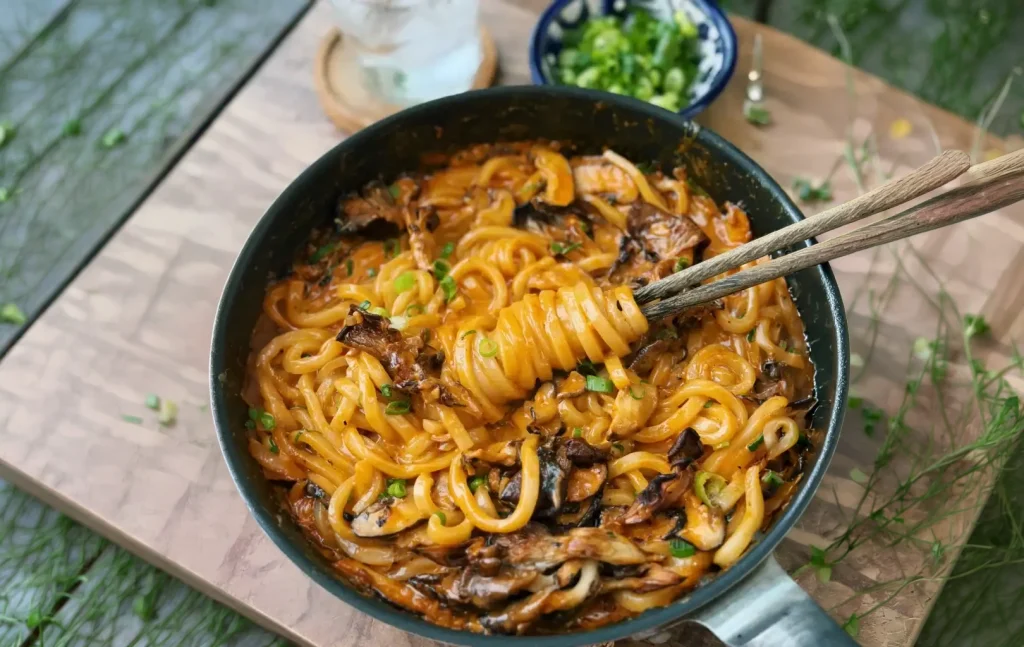
This Month’s Recipe: Spicy Creamy Mushroom Udon

For a spicy, satisfying meal, you have to try this Japanese-Korean fusion bowl! It features udon noodles tossed in a rich, creamy Gochujang Mushroom Sauce and is topped with the crispiest herb-butter-fried oyster mushrooms.


Ingredients:

For the Crispy Oyster Mushrooms:

  • 6 oz (170 g) oyster mushrooms, torn into bite-sized pieces
  • 1 tbsp butter
  • 1 tbsp oil
  • 2-3 sprigs fresh thyme
  • Salt and black pepper to taste

For the Creamy Spicy Mushroom Udon:

  • 2 packs udon noodles (fresh or frozen, about 14–16 oz / 400–450 g total)
  • 5-6 fresh shiitake mushrooms, thinly sliced
  • 1 large shallot, finely chopped
  • 4 cloves garlic, minced
  • 1 ½ – 2 tbsp gochujang (Korean red chili paste), adjusting to your spice preference
  • 1 cup heavy cream
  • ¼ – ½ cup water or chicken/vegetable broth, as needed
  • Salt and black pepper to taste
  • Green onions, sliced (optional, for garnish)

Instructions:

Make the crispy mushrooms: Heat the butter and oil in a large pan over medium-high heat. Add the oyster mushrooms and thyme, season lightly with salt and black pepper, and pan-fry for 4–5 minutes. Stir occasionally until they are golden brown and crispy around the edges. Remove from the pan and set aside.

Build the sauce: In the same pan, add the chopped shallot, minced garlic, and sliced shiitake mushrooms. Sauté over medium heat for 3–4 minutes, until the shallots soften and the mushrooms turn lightly golden.

Make it creamy and spicy: Add the gochujang and stir for about 30 seconds to toast the paste. Pour in the heavy cream and ¼ cup of your water or broth. Mix until the gochujang is fully incorporated and the sauce is smooth.

Add the udon: Place the udon noodles directly into the sauce. Turn the heat up to high and cook for 2–3 minutes, tossing constantly until the noodles separate and are completely coated in the creamy sauce. (Note: If the sauce becomes too thick, add another splash of water or broth.)

Garnish and serve: Taste the sauce and adjust the salt and black pepper if needed. Divide the noodles between two bowls and top generously with the crispy oyster mushrooms and sliced green onions.


Test Your Knowledge!

Take this quick quiz to see how much you know about hip & knee health, and physiotherapy.

1. True or False: If you have knee pain, the root cause is always located specifically in the knee joint.

Answer: False – The body’s joints are part of an interconnected “kinetic chain.” Dysfunction in one joint (like hip stiffness) can alter mechanics and cause pain in another joint, such as the knee.

2. True or False: Pain felt in the groin or buttock area typically indicates an underlying issue with the hip.

Answer: True – While knee problems usually cause localized pain around the knee, groin or buttock discomfort is a classic indicator of hip dysfunction.

3. True or False: Problems originating in your lower back can actually result in hip pain.

Answer: True – Because of “regional interdependence,” a detailed assessment often uncovers that issues in adjacent areas like the lower back are heavily impacting the hips.

4. True or False: An effective physiotherapy plan for joint pain consists entirely of strengthening exercises.

Answer: False – A customized plan is comprehensive. It typically combines exercise therapy (strengthening/mobility) with manual therapy (joint/soft tissue mobilization) and crucial patient education.

5. True or False: The location where you feel pain can sometimes be misleading.

Answer: True – Knee pain may actually originate from a problem in the hip, and vice versa. This is why a thorough, full-body assessment by a physical therapist is vital.